The land is often seen as the canvas for human activity: a flat(ish) surface that we can build on, dig into and stand on. Surface area is becoming increasingly valuable – after all, they ain’t making any more of the stuff. This lecture considered land – both rocks and soil, and built up a picture of what the land we stand on is doing, on both short and very long timescales. How should we think about the ground and its future?
https://www.gresham.ac.uk/sites/default/files/transcript/R_2026_02_16_1102_Czerki_T.docx.pdf
Extra resources
Introduction
Geoindex (British Geological Survey geological map of the UK): https://mapapps2.bgs.ac.uk/geoindex/home.html
Oxygen production in deep groundwater:
Ruff, S. E., Humez, P., De Angelis, I. H., Diao, M., Nightingale, M., Cho, S., … & Strous, M. (2023). Hydrogen and dark oxygen drive microbial productivity in diverse groundwater ecosystems. Nature Communications, 14(1), 3194.
Soil biodiversity: https://www.pnas.org/doi/abs/10.1073/pnas.2304663120
The Conversation article on soil biodiversity: https://theconversation.com/more-than-half-of-life-on-earth-is-found-in-soil-heres-why-thats-important-211455
What does the ground do?
Global Carbon Budget: https://globalcarbonbudget.org/
Climate change impacts on UK peat:
Ritson, J. P., Lees, K. J., Hill, J., Gallego‐Sala, A., & Bebber, D. P. (2025). Climate change impacts on blanket peatland in Great Britain. Journal of Applied Ecology, 62(3), 701-714.
Possible loss of soil carbon in a warming world:
García-Palacios, P., Crowther, T. W., Dacal, M., Hartley, I. P., Reinsch, S., Rinnan, R., … & Bradford, M. A. (2021). Evidence for large microbial-mediated losses of soil carbon under anthropogenic warming. Nature Reviews Earth & Environment, 2(7), 507-517.
British Geological Survey geothermal map: https://ukgeothermalplatform.org/
Is the ground changing?
How interferometry on the NASA NISAR mission works: https://science.nasa.gov/mission/nisar/interferometry/
British Geological Survey explanation of shrinking and swelling in soils:
https://www.bgs.ac.uk/geology-projects/shallow-geohazards/clay-shrink-swell/
Nature paper on invasive earthworm species in North America:
Mathieu, J., Reynolds, J. W., Fragoso, C., & Hadly, E. (2024). Multiple invasion routes have led to the pervasive introduction of earthworms in North America. Nature Ecology & Evolution, 8(3), 489-499.
The ground and us
Recent phytomining discovery:
He, L., Xian, H., Yang, Y., Cao, J., Yang, H., Xie, J., … & Zhu, J. (2025). Discovery and Implications of a Nanoscale Rare Earth Mineral in a Hyperaccumulator Plant. Environmental Science & Technology, 59(48), 25973-25981.
London public land ownership map: https://apps.london.gov.uk/public-land/
Part of:
Notes from a Large Planet: a citizen’s guide to the Earth
This event was on Thu, 19 Feb 2026
Environment
Geography
Science
Sustainability
Professor Helen Czerski
• Frank Jackson Foundation Professor of the Environment (2025 – )
Helen Czerski is a physicist and oceanographer with a passion for science, sport, books, creativity, hot chocolate and investigating the interesting things in life.
She is a Professor at the Department of Mechanical Engineering at University College London and her research focus is the physics of breaking waves and bubbles at the ocean surface. These bubbles change underwater sound and light, help transfer gases from ocean to atmosphere (helping the ocean breathe) and also eject ocean material into the air. She has spent months working on research ships in the Antarctic, the Pacific, the North Atlantic and the Arctic, and is an experienced field scientist.
Helen has been a regular science presenter on the BBC for 15 years, covering the physics of the natural world in BBC2 landmark documentaries (including ‘Orbit’, ‘Operation iceberg’ and ‘Supersenses’), and the physics of everyday life in a range of BBC4 documentaries (including ‘From ice to fire: The incredible science of temperature’, ‘Sound waves: The symphony of physics’, and ‘Colour: The spectrum of science’, along with many others). She currently co-hosts BBC Radio 4’s flagship climate and environment programme Rare Earth.
Helen’s first book Storm in a Teacup won the Italian Asimov Prize and the Louis J. Battan Author prize from the American Meteorological Society. Blue Machine won the Wainwright Prize for Conservation Writing. She was awarded the Institute of Physics Gold Medal in 2018 for her work on physics communication, and an Honorary Fellowship of the British Science Association in 2020. She has been a Trustee of Royal Museums Greenwich since 2018, and was one of the 2020 Royal Institution Christmas Lecturers, giving her Lecture on the topic of the ocean.
Photo credit: Emma Gibson
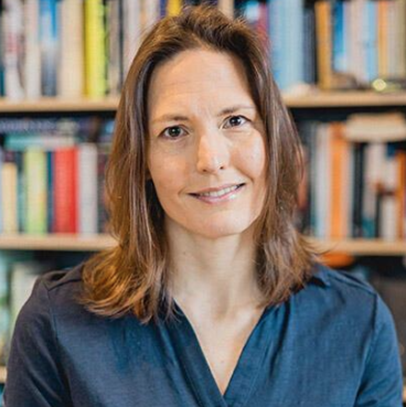
https://www.helenczerski.net/
https://en.wikipedia.org/wiki/Helen_Czerski
https://profiles.ucl.ac.uk/42545-helen-czerski
https://www.rigb.org/explore-science/explore/person/helen-czerski
https://www.chu.cam.ac.uk/fellows/dr-helen-czerski/


